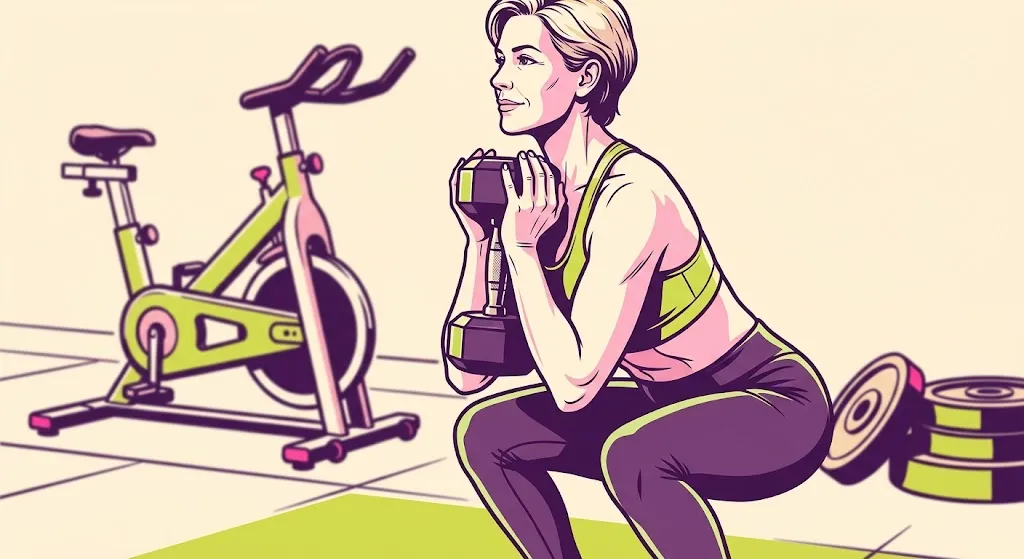
Should You Do Cardio Before or After Weights? (What the 2024 to 2026 Research Actually Says)
Programs Testimonials Shop About Contact
If you want to get stronger, do your weights first and your cardio second. That is the short answer. The bigger news from the research is that the order matters far less than most gyms, coaches and social media accounts would have you believe.
A 2026 umbrella review in Sports Medicine pulled together 17 meta-analyses covering 144 studies and 1,492 people. Mixing cardio and strength training in the same programme did not shrink strength, power or muscle gains compared with lifting alone, and it improved aerobic fitness on top. A separate 2024 review of 59 studies found that the small "cardio blunts your leg strength" effect showed up in men, not in women. So if you have been skipping your bike ride because someone told you it would eat your muscle, you can stop worrying and start planning.
Key Takeaways
If strength is your main goal, lift first and do your cardio after. The advantage is small but real, mostly for lower-body strength.
Doing both in one programme does not cancel your strength gains. A 2026 review of 144 studies found gains were comparable to lifting alone.
In a 2024 review of 59 studies, women did not show the blunted leg-strength gains that men did.
Hard running right before leg day takes more out of you than easy cycling. The type and effort of your cardio matters more than the order.
The best order is the one you will actually turn up for, 3 times a week, for months.
The question that quietly wrecks good training
I am 55 and I have coached women for years, and this is still one of the questions I hear most in the gym. "Should I do my cardio before or after my weights?" It sounds like a small question. It is not small in practice, because the wrong answer shapes every single session.
Here is what I see, over and over.
A woman walks into the gym and does 30 minutes on the cross trainer first, because that feels like the "proper" workout. She is sweaty, her heart rate has been up for half an hour, and her legs are tired. Then she wanders over to the weights with whatever is left. She picks up a pair of 4 kg dumbbells, does a few sets of something, and goes home. Her cardio fitness creeps up. Her strength barely moves. After 12 weeks she decides strength training "doesn't work for her body".
Then there is the opposite woman. She has read somewhere about the "interference effect", the idea that cardio cancels out muscle gains. So she stops doing any cardio at all. No bike, no brisk walks with any real pace, nothing that makes her breathe hard. She lifts 3 times a week and feels strong, but she gets out of breath on the stairs at the train station and her resting heart rate has crept up.
Both women are doing their best. Both are working from the wrong plan.
The confusion is understandable. Older research, especially a widely shared meta-analysis from 2012, did find that combining endurance and strength training could reduce some strength and power gains, particularly when the cardio was running and the volume was high. That finding got picked up, simplified and repeated until it became gym folklore: cardio kills gains. Most of the women I work with are not training for a powerlifting meet or a marathon. They want to be strong, fit and capable, with a body that works well for the next 30 years. For that goal, the folklore is not just unhelpful. It actively gets in the way.
What the research now says about cardio and weights
The research on this has grown a lot in the last few years, and the picture is far more reassuring than the old headlines.
A 2026 review of 144 studies: combining them does not cancel strength gains
In February 2026, a team led by Steffen Held at the German Sport University Cologne published an umbrella review in Sports Medicine. An umbrella review is a review of reviews. Instead of looking at single studies, it gathers every relevant meta-analysis and compares what they found.
They included 17 meta-analyses, which between them covered 144 individual studies and 1,492 healthy participants. The main findings were clear:
People who combined strength and endurance training gained just as much aerobic fitness as people who only did endurance training.
People who combined both gained significantly more strength than people who only did endurance training.
Compared with people who only lifted, the combined group improved aerobic fitness, while strength, power and muscle size gains were comparable.
In plain English: adding cardio to a strength programme gives you the cardio benefits without taking away the strength benefits. That is the opposite of "cardio kills gains".
A 2024 review of 59 studies: women did not show the blunting effect
This is the finding I most want women to hear. In 2024, researchers from Amsterdam published a systematic review and meta-analysis in Sports Medicine that looked specifically at whether sex and training status change the picture. It covered 59 studies and 1,346 participants.
When they split the results by sex, combined training blunted lower-body strength gains in men, but not in women. There were no sex differences for upper-body strength, power or aerobic fitness.
Much of the "interference" research was done on young men. The small drop that shows up in those studies does not appear to apply to women in the same way. That does not mean you can ignore how you put your week together. It does mean you can stop treating cardio as the enemy.
So does the order within a session matter at all?
A little, for one specific outcome. An earlier meta-analysis on exercise order within a session, published in Sports Medicine, compared doing strength first with doing endurance first. Strength first gave better gains in lower-body dynamic strength, the kind you use to squat, lunge, climb stairs and get up off the floor. It made no difference to muscle size, static strength, aerobic fitness or body fat percentage.
The logic is simple. Tired legs lift less. If you do a hard cardio session first, your legs arrive at the squat rack with less to give. You do fewer good reps, or you pick a lighter load, and over months that adds up to less progress. If you lift first, your cardio might feel a touch harder, but for most women that does not change the outcome in any meaningful way.
The type and effort of cardio matter more than the order
A 2024 review in the journal Medicine set out the factors that shape how well combined training works. It listed training level, frequency, intensity, the order of the 2 types of training, the time gap between them, nutrition and sex. Order is on the list, but it is one factor among 7.
Earlier research also suggests running tends to interfere more with strength than cycling does, likely because running involves more impact and more muscle damage in the legs. A long, hard run the morning before a heavy leg session is a much bigger problem than 15 minutes of easy cycling after your squats.
A 2026 semi-systematic review on the order of strength and endurance training came to a similar place: the best choice depends on your goal, and the effects of order are modest compared with the effects of simply doing the training consistently.
How to put cardio and weights together in your week
Here is how I would set it up for a woman who wants to be stronger and fitter, not just one or the other.
1. Decide what your main goal is right now
If your main goal is getting stronger, building muscle or changing your body composition, strength comes first. Your cardio goes after your lifting, or on a different day.
If your main goal is a fitness event, say a 10k in 8 weeks or a charity cycle ride, then on the days when your run or ride matters most, do that first and keep the weights lighter or on a separate day.
Most women I coach are in the first group. They want strength, energy and a body that feels capable. So for most of you, lift first.
2. A warm-up is not a cardio session
Lifting first does not mean walking in cold and grabbing a heavy barbell. Spend 5 to 10 minutes warming up: a few minutes on the bike or rower at an easy pace, then some mobility and a couple of lighter warm-up sets of your first exercise.
The difference is effort. A warm-up leaves you feeling ready. A 30-minute cardio session leaves you feeling spent. Keep the warm-up easy enough that you could chat through it.
3. Keep post-lifting cardio short and steady
After your strength work, 10 to 20 minutes of steady cardio is a great add-on. Think incline walking, easy cycling, the rower at a comfortable pace, or a brisk walk home. You should be breathing harder but still able to speak in short sentences.
This builds your aerobic fitness, helps your heart and lungs, and does not eat into the strength work you just did.
4. Give leg days some breathing room
If you run, try not to put your hardest run right before your heaviest leg session. Either split them by at least a few hours, put them on different days, or keep the run easy on leg day. The 2024 Medicine review lists the gap between sessions as one of the factors that shapes results, and the practical rule is simple: the harder the cardio, the more space it needs from leg day.
Cycling, swimming and walking tend to be friendlier partners for leg training than running or jumping-based classes.
5. Separate sessions if your life allows it
If you can do strength in the morning and a walk or swim in the evening, that is a lovely way to get the best of both. If you can only train once a day, do both in one session with weights first. If you can only train 3 times a week, that is fine too. Consistent, combined training 3 times a week beats a perfect plan you cannot keep.
6. A simple week that works
Here is an example week for a woman with 3 strength sessions and a busy life:
Monday: full-body strength, about 40 minutes, then 15 minutes of easy cycling.
Tuesday: a 30-minute brisk walk, ideally outside.
Wednesday: full-body strength, then 10 minutes of incline walking.
Thursday: rest or gentle mobility.
Friday: full-body strength, no cardio needed.
Saturday: 30 to 45 minutes of something you enjoy that raises your heart rate: a swim, a bike ride, a hilly walk, a dance class.
Sunday: rest, or an easy walk with someone you like.
That is 3 strength sessions, around 2 hours of cardio across the week, and plenty of recovery. Nothing fancy. It works because it is repeatable.
7. Eat enough to support both
Combined training asks more of your body. If you are adding cardio to a strength programme, make sure you are eating enough protein spread across the day and enough overall food to recover. Chronic under-eating plus lots of cardio is one of the fastest ways to lose strength, and that has nothing to do with the order you train in.
How this works inside Body Reclaim
In Body Reclaim, strength always comes first in a session. That is the foundation of the Compound Method™: small, consistent strength sessions that build on each other week after week for 12 weeks. Cardio is there, but it has a job. It sits after the lifting as a short, steady finisher, or on separate days as walks and activity you actually enjoy.
We do not do punishing cardio circuits before the weights, and we do not ban cardio either. The aim is a body that is strong enough to carry the shopping, fit enough to climb the hill, and well enough recovered to come back and do it again.
Frequently asked questions
Does cardio kill muscle gains?
No, not for most people training sensibly. The 2026 umbrella review of 144 studies found that combining cardio and strength gave comparable strength, power and muscle gains to strength training alone. The 2024 review of 59 studies found women did not show the blunted leg-strength gains seen in men. Very high volumes of hard running can get in the way, but a few steady cardio sessions a week will not.
Should I warm up with cardio before lifting?
Yes, but keep it short and easy. 5 to 10 minutes on a bike or rower at a chatty pace, followed by mobility and lighter warm-up sets, is plenty. Save the harder, longer cardio for after your lifting or for a different day, so your legs are fresh for the strength work.
Is it better to do cardio and weights on separate days?
It can be, especially if your cardio is hard or you run a lot. Separating them by a few hours or a full day gives your legs time to recover. If you can only train once a day, doing both in one session with weights first works well too. The best set-up is the one you can keep doing week after week.
What type of cardio works best alongside strength training?
Lower-impact options like cycling, walking, swimming and rowing tend to sit most easily alongside strength training. Running is great for fitness, but hard running before a leg session is more likely to leave your legs tired. Mix in whatever you enjoy, and keep the hardest efforts away from your heaviest lifting days.
How does Body Reclaim handle cardio and strength training?
In Body Reclaim, strength comes first in every session, followed by a short, steady cardio finisher or separate walking and activity days. The 12-week Compound Method™ builds strength, fitness and consistency together, so you do not have to choose between them. Join the waitlist to be notified when the next intake opens.
The order is a detail. Turning up is the plan.
If you take one thing from this, let it be this: lift first when strength is the goal, keep your cardio steady and sensible, and stop worrying that a bike ride will undo your hard work. The research says it will not.
What undoes the work is not training at all because you could not decide how to do it perfectly. So pick an order, put it in your diary, and go and do it this week.
Join the waitlist to be notified when the next Body Reclaim enrolment opens.
About the author
Jane Cox is a 55-year-old strength coach and the founder of Body Reclaim at Everbodi. She has spent years helping women over 40 get strong, fit and confident through simple, consistent strength training. Her Compound Method™ is built on small daily actions that add up to lasting change.

Our Method
The Compound Method™ Mission Ethos
Programs & Shop
Programs Shop Join the Priority List →
Learn
Follow Us
© 2026 Everbodi™. All rights reserved. UK. Terms · Privacy Results may vary. Consult a qualified health professional.