Why Do Perimenopause Symptoms Get Worse During a Divorce, an Empty Nest or a Diagnosis?
Because your body is not built to absorb a hormone shift and a life shock at the same time. Perimenopause already asks a lot of your nervous system. A divorce, a child leaving home, a health scare or a parent's death asks even more. Stack them together and the wear shows up everywhere at once: sleep, mood, appetite, midsection body fat, energy. It is not a coincidence and it is not you falling apart. It is two systems under strain hitting the same body at the same time.
Researchers who have followed women through this stage for over 20 years keep finding the same thing. The women whose symptoms hit hardest are rarely the ones with the most severe hormone changes. They are the ones going through the most stressful life events with the least support around them. Your hormones set the stage. Your life circumstances decide how hard the show hits you.
Key Takeaways
Women going through a divorce, an empty nest, a diagnosis or a bereavement in midlife report more severe menopause symptoms than women with a calmer season, according to longitudinal research from the Seattle Midlife Women's Health Study.
A study published in PLOS One found that stressful life events combined with low social support were linked to significantly worse menopause symptoms, independent of hormone levels.
A 2025 study on empty nesters found those with depressive symptoms were 72% less likely to rate their own health as good, and had 1.45 times the rate of chronic disease compared with those without depressive symptoms.
Repeated stress activation (what researchers call allostatic load) wears down the same hormonal system that regulates your cycle, your sleep and your midsection body fat, which is why big life events and perimenopause symptoms compound rather than simply add up.
A UK literature review from April 2026 found women are still routinely dismissed by GPs at exactly the moment their symptoms are hardest, being told it is "just stress" instead of getting a proper look at what is happening in their body.
It Is Not Just In Your Head
I am 55. I have been through my own divorce during perimenopause, so I know what it looks like from the inside. You are not imagining that everything got harder at once. You are not being dramatic. And you did not suddenly lose the resilience you used to have.
Here is the pattern I see over and over in the women I work with. She has been managing perimenopause reasonably well. Sleep is patchy but manageable. Body fat around the middle has crept up but she has made peace with it. Then something big happens. A marriage ends. The last child leaves for university and the house goes quiet. A scan comes back with a word she was not expecting. A parent dies. Within weeks, everything that was merely annoying becomes unmanageable. Sleep collapses completely. The scale climbs. Her clothes stop fitting properly. She cries in the car park at the school run, or she does not cry at all when she thinks she should.
She usually assumes something is wrong with her personally. That she is coping worse than she should be able to. That other women manage a divorce or an empty nest without falling apart physically, so something must be wrong with her specifically.
That is not what the research shows. What is actually happening is that her body was already spending effort managing a hormonal transition. A major life stressor on top of that is not one more thing on the list. It is a second demand on the exact same system that was already stretched. Cortisol, the stress hormone, does not distinguish between "my hormones are shifting" and "my marriage just ended." It responds to both by staying elevated for longer and recovering more slowly. That is why sleep, appetite, mood and midsection body fat all move at once. They share the same underlying hormonal wiring.
And this is happening at the exact point in a woman's life when she has the least spare capacity to deal with it. Divorce often means new financial pressure and a smaller support network at home. An empty nest often arrives at the same time as ageing parents needing care. A diagnosis, hers or someone she loves, brings appointments, waiting rooms and fear on top of everything else already on her plate. There is rarely a quiet corner in the calendar to actually recover.
What The Research Actually Shows
This is not a theory built from anecdotes. Multiple research groups have tracked exactly this pattern.
The Seattle Midlife Women's Health Study, which has followed the same group of women for more than two decades, found that the most frequently reported challenges for midlife women include multiple co-occurring stressors: divorce or relationship breakdown, a woman's own health problems, and the death of a parent. The study notes that women experience several transitions at once during this stage: the biological transition of menopause, the developmental transition of an ageing sense of self, and situational transitions such as divorce, caregiving for parents, or children leaving home. These rarely arrive one at a time.
A separate study published in PLOS One looked directly at the relationship between social support, stressful life events and menopause symptom severity. It found that postmenopausal women who were seeking treatment for their symptoms reported significantly more stressful life events and less social support than a healthy comparison group. In plain terms: the women whose symptoms were bad enough to seek help were not necessarily the ones with the most extreme hormone changes. They were disproportionately the ones with the most stress and the least support.
There is a mechanism behind this, and it has a name: allostatic load. This describes the cumulative wear on your body's stress-response system when it gets activated repeatedly, whether by hormonal shifts, sleepless nights, grief, financial strain or conflict. Research on the HPA axis, the hormonal pathway that governs your stress response, shows that chronic activation increases strain across metabolic regulation, immune function and mood. Perimenopause already asks something of this system. A major life event asks for more, from a system with nothing spare to give.
The 2025 study on empty nesters puts numbers on the physical cost. Empty nesters with depressive symptoms were 72% less likely to rate their own health as good compared with those without depressive symptoms, and had chronic disease rates 1.45 times higher. The emotional weight of a major life change was showing up as a measurable difference in physical health, not just mood.
And on top of all this, the healthcare system is not always catching it. A literature review published in April 2026 examining women's experiences of reproductive health services in the UK found a consistent pattern of dismissal, where symptoms were minimised or attributed to "just stress" rather than properly assessed. So a woman going through the hardest stretch of her adult life, with symptoms that research shows are genuinely more severe at this point, is also the one most likely to be sent away from her GP with nothing more than reassurance.
What Actually Helps When Everything Is Falling Apart At Once
None of this means you are stuck waiting for the divorce to finalise or the house to feel normal again before your body settles. There is a real difference between what you cannot control right now (the life event itself) and what you can influence (how much extra strain your body carries on top of it).
The instinct, when everything feels chaotic, is often to either do nothing (there is no capacity left) or to try to fix everything at once (diet, exercise, sleep, mindset, all starting Monday). Both responses tend to fail for the same reason. They ignore that your system is already at capacity. Adding one more demanding thing, even a well-intentioned one, is still adding a demand.
What actually reduces the wear is small, protective action, one habit at a time, chosen because it fits into a life that is already stretched thin, not because it looks impressive on paper.
That looks like:
Protecting sleep as a non-negotiable, even when everything else is chaotic. Not perfect sleep. Consistent enough sleep. A regular wake time does more for your hormonal recovery during high stress than almost anything else, and it is one of the few things fully within your control when the rest of life is not.
Keeping regular meals with enough protein, rather than skipping meals under stress or grazing on whatever is nearest. An erratic eating pattern on top of an already taxed system adds another layer of strain your body has to manage.
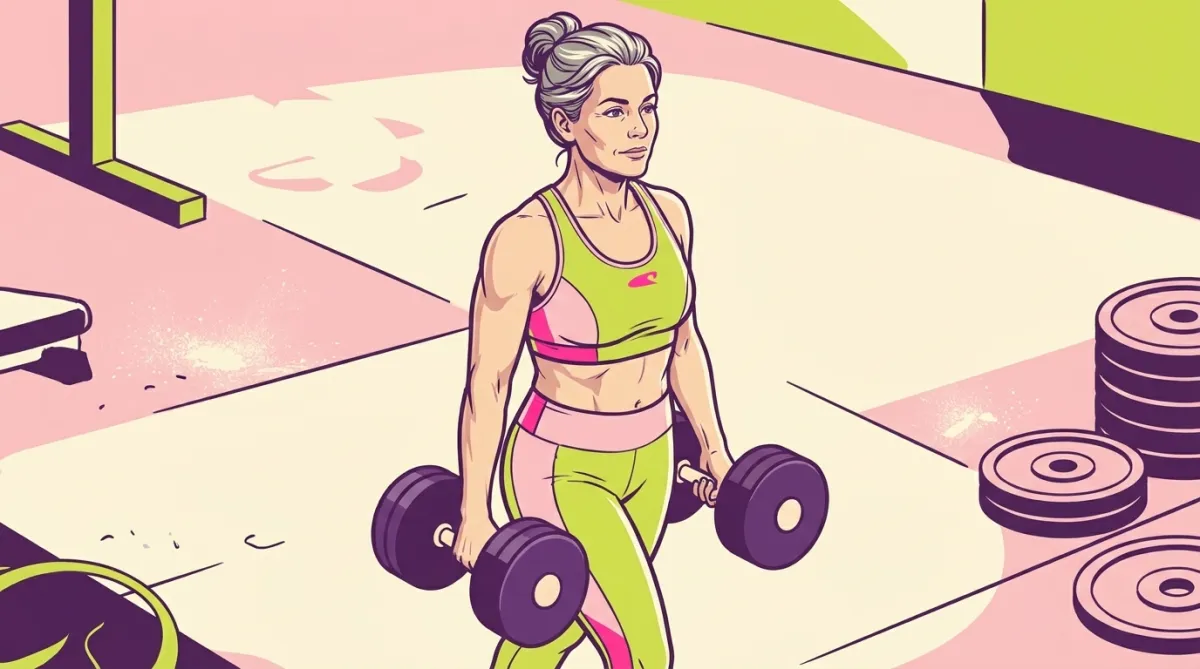
Strength training two or three times a week, not as a punishment or a distraction, but because resistance training is one of the few interventions shown to support the same hormonal systems disrupted by chronic stress. It does not need to be intense. It needs to be consistent.
Naming what is actually happening instead of pushing through in silence. Telling a friend, a partner or a professional what you are carrying reduces the isolation that the research consistently links to worse outcomes. Social support was one of the two variables in the PLOS One study directly linked to symptom severity. It is not a soft add-on. It is a measurable factor.
This is the order I build into Body Reclaim, the 12-week program I run for women in exactly this stage of life. Not a plan that demands everything at once, but one habit before the next, built to fit around a life that might currently include solicitors, empty bedrooms, hospital appointments or all three. Strength that works with what capacity you actually have, not the capacity you had five years ago.
Common Questions
Is it normal for perimenopause symptoms to get worse after a stressful life event?
Yes. Multiple studies, including longitudinal work from the Seattle Midlife Women's Health Study, show that women going through major life stressors during perimenopause report more severe symptoms than women in a calmer period. This is a documented pattern, not a sign that you are managing things badly.
Can stress actually make menopause symptoms physically worse, or does it just feel that way?
It is physical, not just perception. Chronic stress keeps cortisol elevated for longer and slows recovery, and cortisol interacts directly with the same hormonal pathways involved in sleep, appetite and midsection body fat. The PLOS One study found stress and low social support were linked to measurably more severe symptoms, independent of hormone levels alone.
Why do doctors sometimes dismiss these symptoms as "just stress"?
A 2026 UK literature review found a consistent pattern of women's symptoms being minimised or attributed to stress rather than properly assessed, particularly during major life transitions. This does not mean stress is not a real factor. It means stress and hormonal changes are often happening together, and both deserve a proper look rather than a dismissal. If your symptoms are significant, it is worth asking your GP directly for a full assessment rather than accepting a brief explanation.
What can I actually do about this if I cannot control the life event itself?
Focus on what is within your control: sleep consistency, regular meals with protein, strength training two to three times a week, and telling someone what you are carrying rather than managing it alone. These will not remove the life event, but they reduce the extra wear your body carries on top of it.
Does Body Reclaim help with this kind of thing, or is it just a fitness program?
Body Reclaim was built around exactly this stage of life, including the parts nobody puts in a fitness advert. It teaches strength, food and recovery habits that fit into a life that might currently be chaotic, one habit before the next, rather than demanding everything at once. Join the waitlist to be notified when the next intake opens.
Whatever has landed on you this year, a divorce, an empty nest, a diagnosis, a quiet Tuesday that feels heavier than it should, your body reacting is not weakness. It is exactly what the research says should happen when a hormone shift and a life shock hit at the same time. The way through is not more effort piled onto an already stretched system. It is protecting sleep, eating regularly, building strength and letting someone else carry some of the weight with you. Join the waitlist to be notified when the next Body Reclaim enrolment opens.
About Jane Cox
Jane Cox is a Bournemouth-based personal trainer, menopause specialist and creator of Body Reclaim. She is 55, and built her approach after 7 years of research with midlife women and going through her own perimenopause, body fat gain, and divorce, and rebuilding her strength and health using the same method she now teaches. She has worked with hundreds of women navigating this exact stage of life.

Our Method
The Compound Method™ Mission Ethos
Programs & Shop
Programs Shop Join the Priority List →
Learn
Follow Us
© 2026 Everbodi™. All rights reserved. UK. Terms · Privacy Results may vary. Consult a qualified health professional.