
Feel strong in your own body again
You are not lazy. You are not broken. Your biology just changed.
And nobody handed you the new rulebook. Body Reclaim gives it back to you, one little change at a time, in the right order at the right time, at a pace a midlife body can actually keep up with.
Free supercharge your walks guide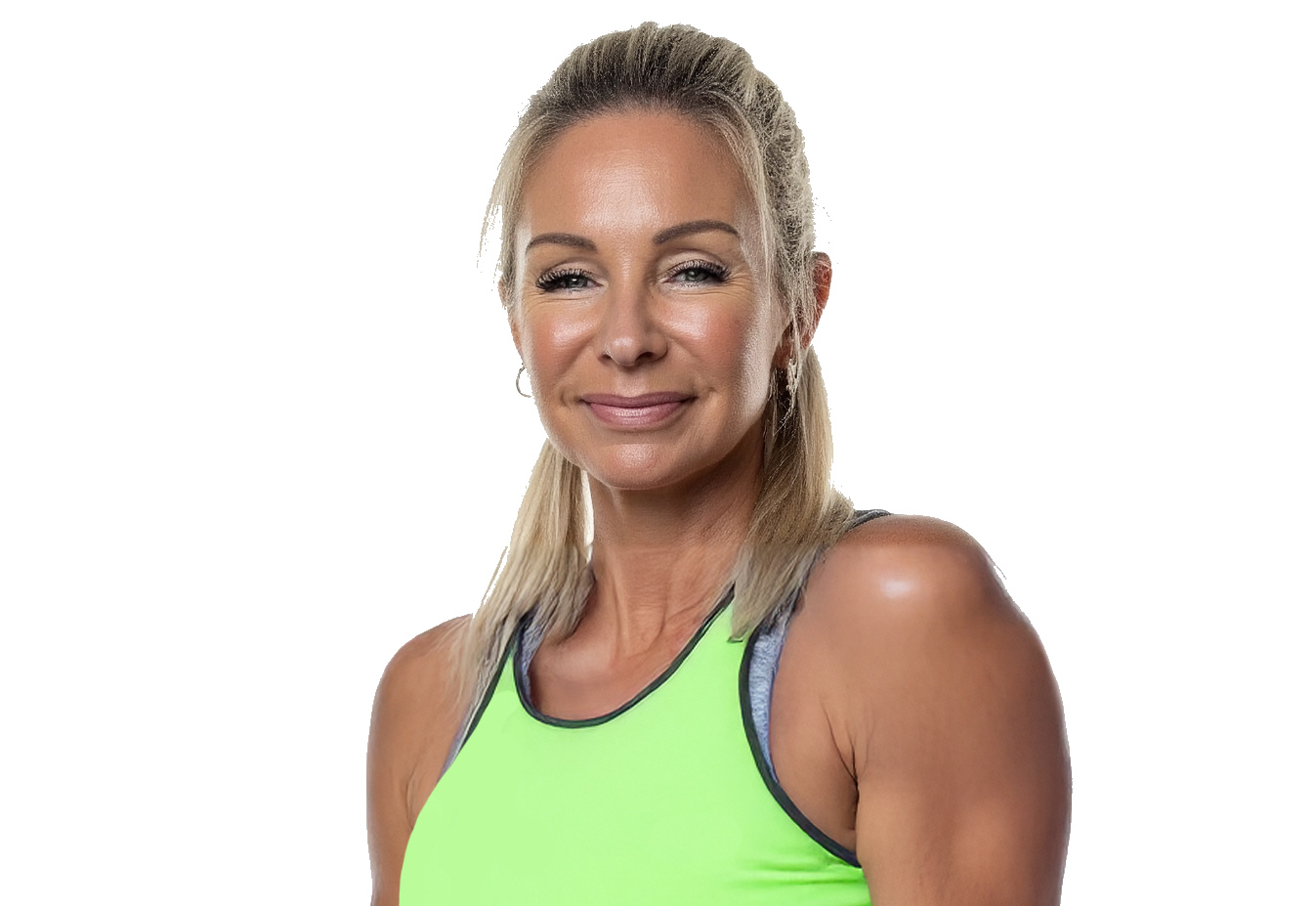
(I know. I've been there.)
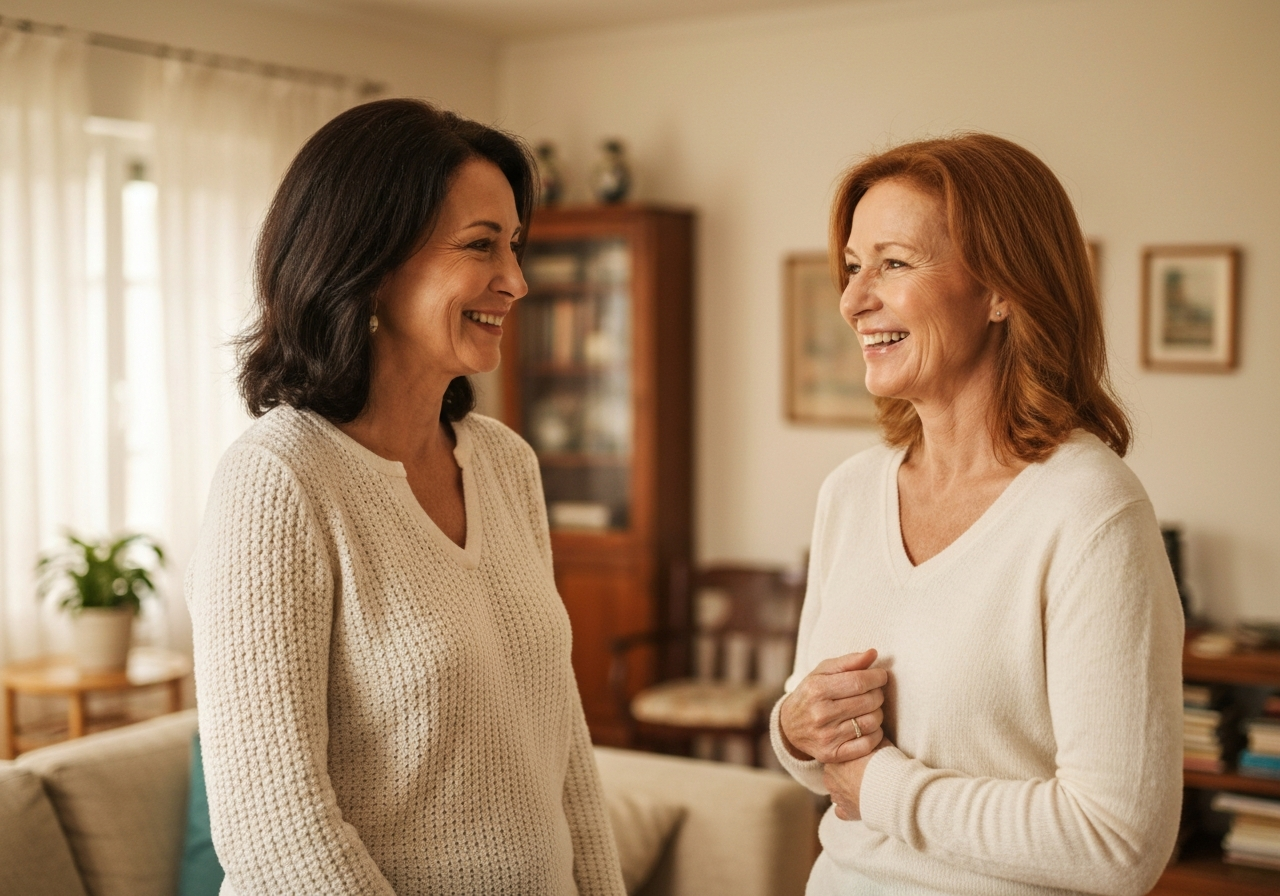
You've tried everything. The slimming clubs. The gym membership you still pay for and rarely use. The low-fat years. The 5am starts. Maybe the jab. Maybe the supplements a much younger woman swore by online.
And still, the body in the mirror doesn't match the effort you've put in. The middle that won't shift. The afternoon when your energy falls through the floor. The sleep that broke one year and never came back. The brain fog you mentioned to your GP, who called it stress and sent you home.
Here's what nobody told you. You didn't fail a hundred plans. The plans failed you. Every one of them was written for a body you no longer have.
None of us were handed the new rulebook. We were taught to try harder, eat less, move more, and to blame ourselves when it stopped working.
But you can't try harder your way out of a body that changed underneath you.
The work was never the body. The body is the response.
It doesn't have to be this way
Here's what I know now that I didn't know then.
- You don't have to overhaul your life.
- You don't have to give up the food you love.
- You don't have to find an hour a day you haven't got.
And we start with your energy, because without energy nothing else falls into place.
How it works
Twelve weeks. One little change a week.
In the right order at the right time. Never everything at once, because a woman who's already running on empty can't take everything at once.
You choose the change. I show you why it comes when it does. You keep it until it stops feeling like effort, and then the next one arrives.
Each little yes makes the next one easier. They stack up. That's why it's called The Compound Method™.
What an ordinary Tuesday looks like afterwards
Picture a Tuesday, six months from now. Same job. Same house. Same life.
- You wake before the alarm, because you slept.
- Breakfast isn't a decision any more. It takes four minutes and you sit down for it.
- Three o'clock arrives and nothing happens. No crash, no wandering to the cupboard for something you hadn't planned. The afternoon is just an afternoon.
- You shut the laptop at six with something still in the tank.
- Your clothes sit differently. You were in the photo at the weekend and you didn't check it before it went on the family chat.
- And when you had a bad fortnight, and you will, it didn't undo you. You picked it up on the Wednesday, from where you were.
Not a before and after photo. An ordinary Tuesday that works.
What you leave with
Here's the part I'm proudest of. It's built so you stop needing me.
Twelve weeks in, you're not renting a plan. You have a method you understand, and you know why every piece of it is there. So when life changes again, and it will, you won't be starting from nothing.
Not a client for life. A woman who doesn't need one.
Why trust this
200+ women
Through Body Reclaim since 2018.
Qualified since 1995
Level 3 personal trainer, 3rd Age Woman menopause specialist, and author of Perimenopause Fitness and Nutrition Basics. Over twenty years in the industry.
5 stone lost
Through my own perimenopause, size 16 to size 6. I built this on my own body first.
Before starting the program, I was constantly struggling with my energy levels. I was always tired throughout the day and had no energy for anything at the end of the day. After just week 1, and following the advice given in that week, I've noticed a massive improvement in my energy levels. I have more energy in the morning and it carries me through the day.
— AW
What women tell me they notice most is more energy, less hunger, better sleep, being less out of breath, feeling back in control, and their confidence coming back.
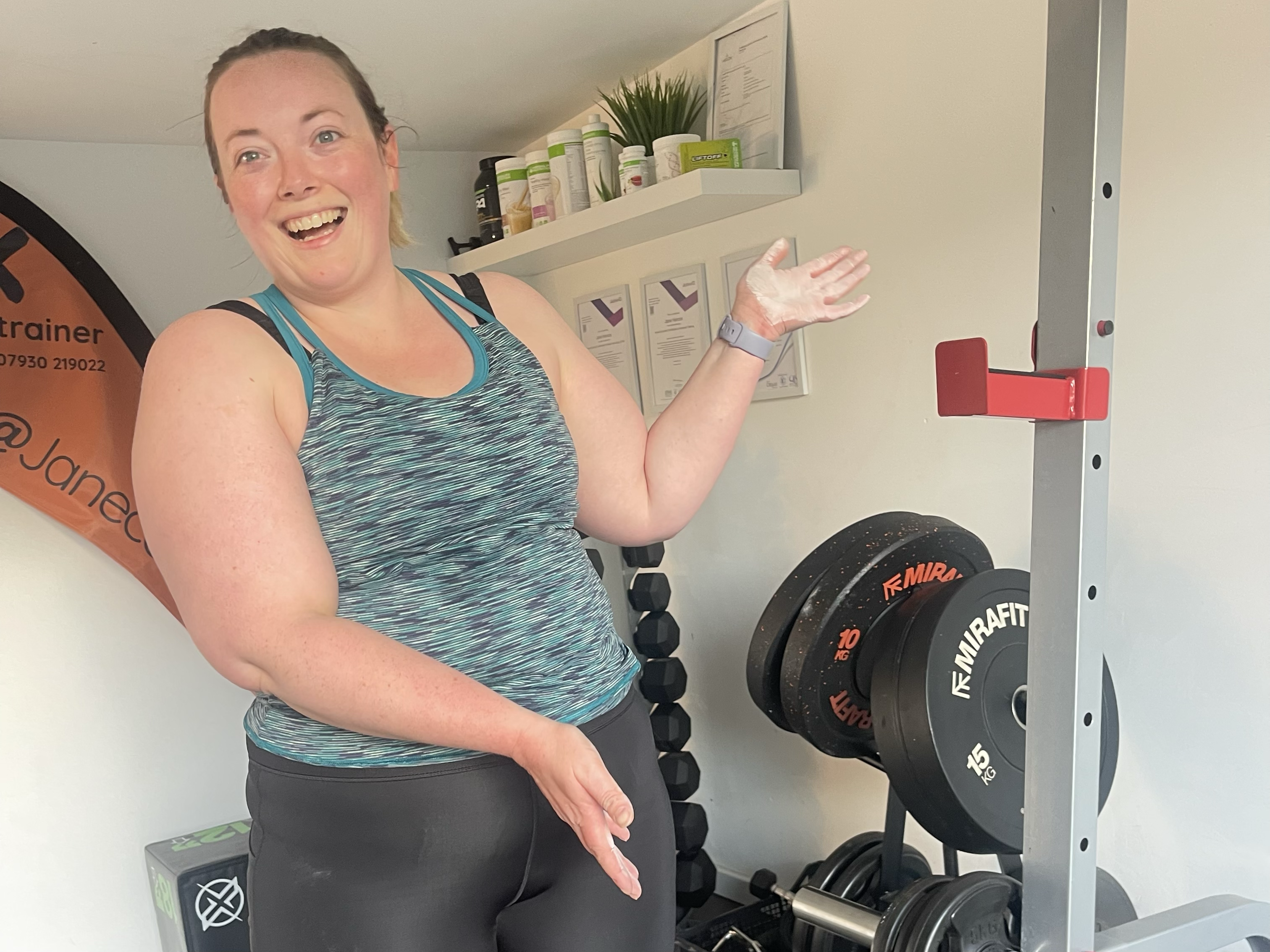
week 2 of the 12 week program

Who Body Reclaim is for
This is for you if you're over 40, you've tried everything, and you're done trying harder. If you want to understand the body you have now instead of fighting it. If you want a method that fits a real life, a busy diary, a job, a family, the lot. Ideal for women who often work from home, where the day has shrunk to a few hundred steps between the desk and the kettle.
Maybe something shifted recently. A birthday. An empty room. A diagnosis. A quiet Tuesday where you decided you were done waiting for the right moment. Different doorways, same decision. You're welcome here.
It isn't for you if you want the next bootcamp, a crash transformation, or a reason to keep doing what hasn't worked. That's genuinely fine. It just isn't this.
You don't need to decide anything big today.
When you're ready, there's a program. Body Reclaim is twelve weeks inside Everfit, the app and community where the work happens, and where women stay long after their twelve weeks are done. But that's for when you're ready.
Start where you are. Start with your walks. The free guide meets you exactly where you are right now, the woman who's already trying, and shows you how to make the trying actually count.
Send me the free guide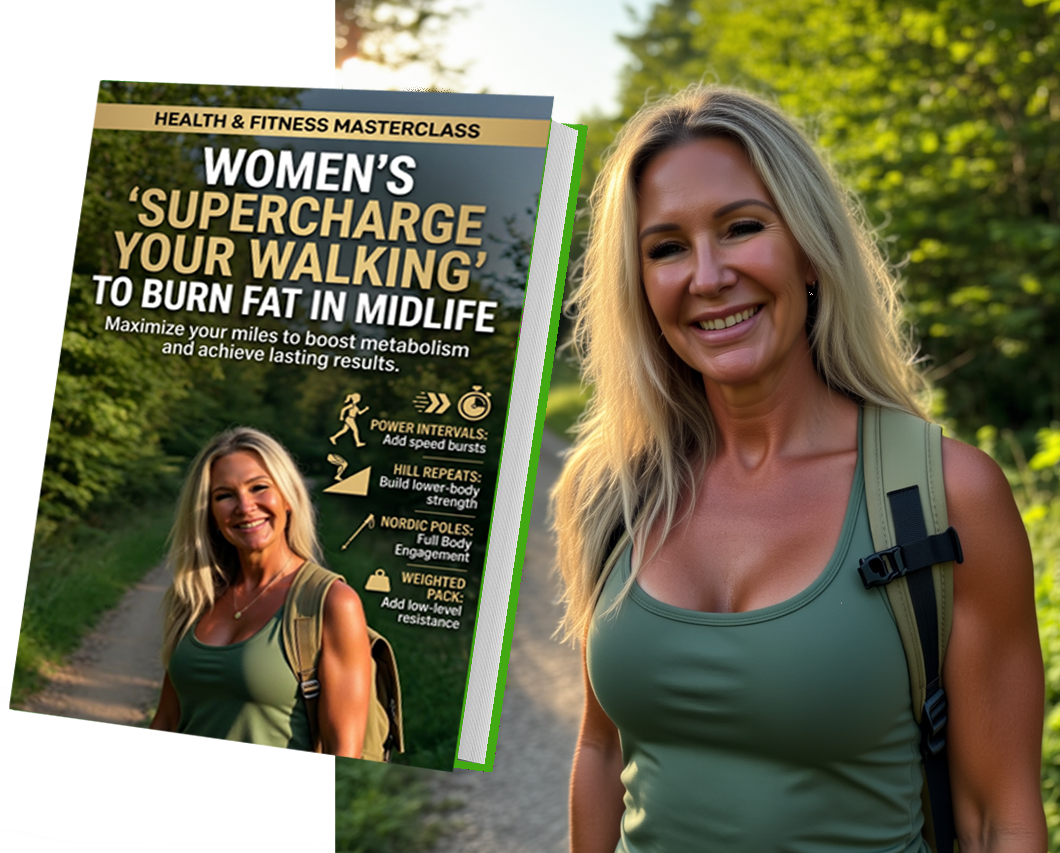
start here
The questions women ask me
Perimenopause, the plain-English answers.
Why am I gaining belly fat in perimenopause?
Because the hormone driving where your body stores fat has shifted, and it's rarely about willpower. As oestrogen drops in perimenopause, the body's cortisol response gets louder, and cortisol decides that the middle is where new fat goes. Adding more cardio or eating less typically raises cortisol further, which is why "doing more" stops working in midlife. The fix starts with calming the system, not fighting it.
How much protein should a woman over 40 eat, and when?
25 to 30 grams of protein per meal, three times a day. The muscle-building response to protein drops in older women compared with younger ones, so the dose per meal matters more than the daily total. Eat the bulk of the day's protein at breakfast and lunch rather than back-loading it at dinner. Morning protein protects muscle and steadies blood sugar through the afternoon energy crash.
Should I do strength training after 40?
Yes. Resistance training is the single biggest lever for body composition, bone density, energy and longevity in midlife. Women lose lean muscle mass across the perimenopause transition, and that lost muscle is what slows the metabolism, not age itself. Two to three short strength sessions a week, focused on the basics (squat, hinge, push, pull, carry), do more than any cardio class.
How much water should I drink in perimenopause?
Aim for roughly two to two-and-a-half litres a day, more in hot weather or after exercise. Perimenopausal women tend to under-drink, and even mild dehydration drives the symptoms most often blamed on hormones: brain fog, fatigue, false hunger signals, headaches, broken sleep. Drinking a glass of water before each meal is the simplest single intervention.
Can walking actually help with perimenopause belly fat?
Yes, and it's consistently underrated. A daily walk after meals reduces blood sugar spikes (which directly affect fat storage around the middle), keeps cortisol low, and improves sleep quality. All three of those matter for midlife body composition. The aim is consistency over intensity. Two or three short walks a day beats one long, exhausting walk by a long margin.
What is the best exercise for perimenopause weight loss?
A combination of walking and strength training, in that order. Walking calms cortisol; strength training rebuilds the lean muscle that drives a healthy metabolism. Long cardio sessions and high-intensity classes, while popular, often raise cortisol further in a midlife body that's already under stress. Start with walking. Add two short strength sessions a week. Compound from there.
How long does it take to lose perimenopause belly fat?
Body composition changes in midlife are slower than they were at 30, and that's biology, not failure. Most women on a well-designed method notice less bloating and more energy within the first few weeks, then sleep improvements, then visible body composition change over the twelve. The little wins compound. Twelve weeks of small daily yes's stack into the change that holds.
You can't get this wrong. It's a conversation, not a commitment. Fifteen minutes to look at where you are now, and what would actually move first.
No pressure. No pitch. Just a straight answer about whether this is right for you.