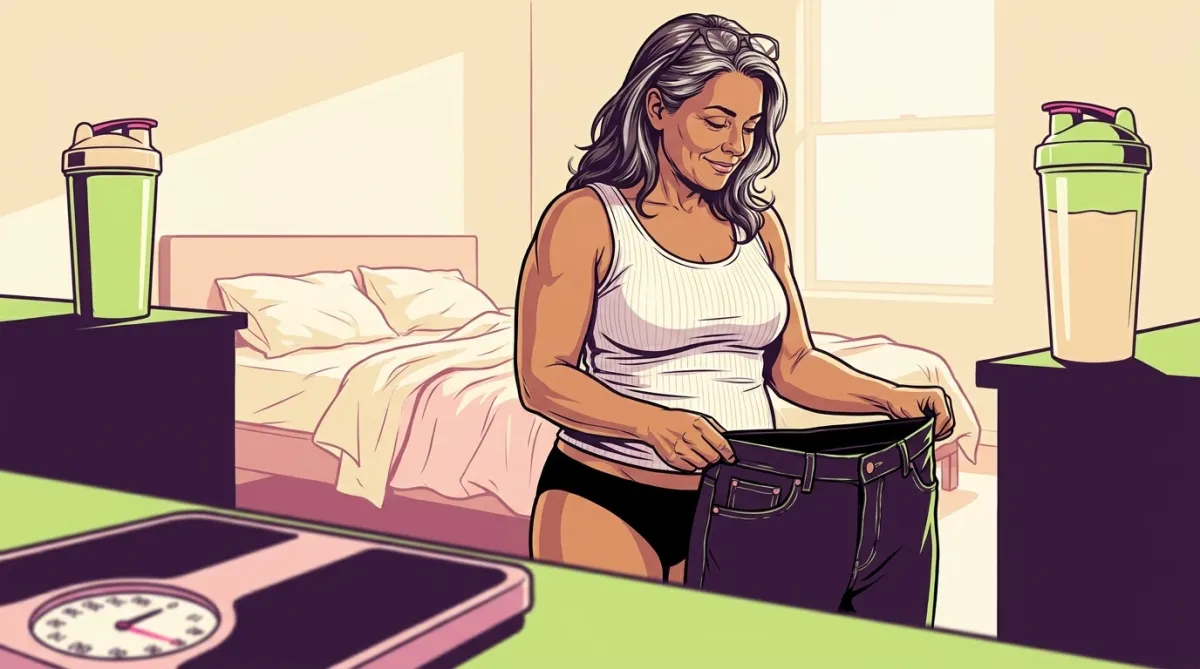
Why the Scales Don’t Always Reflect the Progress You’re Making (And What to Look At Instead)
You did everything right this week.
You moved your body. You ate well. You went to bed at a decent time. You stayed consistent in a way you have not managed in months.
Then you stepped on the scales. And the number did not move.
Or worse — it went up.
And just like that, the week that felt like genuine progress turned into evidence that you are failing.
I want to talk about that. Because what happened there is not a reflection of your effort, your progress, or what your body is actually doing. It is a reflection of one thing: your gravitational relationship with the planet at that specific moment in time.
The scales measure mass. That is all. They do not know whether that mass is fat, muscle, water, bone, the meal you ate an hour ago, or the fact that your hormones are doing something entirely normal this week. They just add it up and give you a number.
And that number, taken in isolation, is one of the least useful pieces of information you can collect about your health.
Key Takeaways
- The scales measure total body mass — not fat, not muscle, not progress
- Weight can fluctuate by 2 to 5 pounds in a single day from water alone
- Building muscle while losing fat can keep the scale static for weeks — while your body composition changes significantly
- Perimenopause makes scale fluctuations more pronounced and less meaningful than at any other stage
- There are far more accurate markers of progress available to you
What the scales actually measure
Your weight at any given moment is the sum of everything in your body: fat tissue, muscle tissue, bone, organs, blood, water, and whatever is currently moving through your digestive system.
That last part alone can account for two to four pounds of variation on any given day, depending on what you have eaten and how recently.
Water is the biggest variable. Research consistently shows that body weight can fluctuate by two to five pounds within a single 24-hour period — not because of fat gain or loss, but simply because of fluid shifts. What you ate yesterday, how much sodium it contained, how much you drank, where you are in your hormonal cycle, how much sleep you got, how stressed you have been — all of it moves fluid in and out of tissues.
A high-carbohydrate day, for example, causes your muscles to store glycogen as a fuel source. Each gram of glycogen binds approximately three grams of water. So a day of eating more carbohydrates than usual — even entirely healthy ones — can add two pounds to the scale by morning. That two pounds is energy storage and hydration. It is not fat.
The scales do not tell you any of this. They just give you the number.
Why it gets more complicated in perimenopause
Oestrogen influences how your body handles fluid.
As oestrogen levels fluctuate during perimenopause — dropping, spiking, dropping again in a pattern that is rarely predictable — so does your body's tendency to retain water. Many women notice that their weight varies far more dramatically week to week than it ever did in their 30s. This is not imagination. It is hormonal water retention, and it is a normal response to an unstable hormonal environment.
Cortisol adds another layer. When cortisol is elevated — which, as we know, is common in women managing a lot — it triggers the release of aldosterone, a hormone that causes the kidneys to hold onto sodium and water. Higher stress equals more water retention equals a higher number on the scale, with no change in body fat at all.
And then there is the muscle question.
When you start or increase your exercise — particularly strength training — your muscles respond to the new demand by retaining more water as part of the repair and adaptation process. This is called exercise-induced inflammation, and it is a good sign. It means your muscles are responding and growing stronger. But it adds weight. In the first four to six weeks of a new exercise program, it is entirely possible to be building muscle, losing fat, and watching the scale stay completely still or go up slightly.
The body is changing. The scale cannot see it.
The muscle and fat problem
This is the one that matters most, and it is the one most women do not fully understand.
Muscle is denser than fat. A pound of muscle and a pound of fat weigh exactly the same — a pound — but muscle takes up significantly less space. Two women can weigh an identical amount while looking and feeling completely different, because one has a higher proportion of muscle and the other has a higher proportion of fat.
When you build muscle and lose fat simultaneously — which is exactly what happens when you combine strength training with appropriate nutrition — your weight can stay the same for weeks while your body composition shifts measurably. Your clothes fit differently. Your waist changes. You feel different in your body. Your strength increases.
The scale shows: no progress.
The scale is wrong.
Research on body recomposition consistently confirms this. A 2020 study in the Journal of Strength and Conditioning Research found that participants who resistance trained over 12 weeks showed significant improvements in body composition — reduced fat mass and increased lean mass — with minimal changes in total body weight. The scale would have told them nothing was happening. Every other measure would have told a completely different story.
What to look at instead
How your clothes fit — particularly at the waist
Visceral fat, the fat stored around the abdominal organs, is both the most health-relevant type and the first to shift with the right lifestyle changes. Your waistband, a pair of jeans you have not worn in a while, the way a particular top fits across your shoulders — these are more informative than a number on a scale. Take measurements monthly if you want data. Waist circumference is one of the most reliable indicators of metabolic health.
Your strength and what your body can do
Can you do more than you could four weeks ago? Lift slightly heavier, walk slightly further, recover slightly faster? Functional strength is a direct measure of the muscle tissue you are building and maintaining. It is also one of the strongest predictors of long-term health outcomes — more so than weight. Tracking what your body can do tells you far more about your progress than tracking what it weighs.
Your energy through the day
Not just in the morning. Through the afternoon. How you feel at 3pm is a surprisingly reliable indicator of how your blood sugar, nutrition and movement habits are working together. Consistent energy — without crashes, without the need to prop yourself up with caffeine by midday — is a sign that something real is changing underneath.
Your sleep quality
Sleep improves when body composition improves, when stress reduces, when nutrition stabilises. If you are sleeping more deeply, waking less, or feeling more rested than you did a month ago, that is progress — measurable, meaningful progress that the scales cannot capture.
How you feel in your body, week to week
Not a number. A sense. Less bloated. Less stiff in the mornings. Easier to carry the shopping. More willing to walk to the far car park. Less bothered by the stairs. These are not soft, unscientific observations — they are your body telling you, in the clearest language it has, that things are changing.
The number is not the story
Weight can be a useful data point when it is one of many and when it is tracked over time — weeks and months, not days. A long-term downward trend across many weeks tells you something. A single weigh-in, or even a week of weigh-ins, tells you almost nothing about whether your habits are working.
The women who make the most sustained progress are, almost without exception, the ones who stop making the scale the primary judge of their effort. Not because they stop caring about their body — they often care deeply. But because they start collecting better information.
Better information leads to better decisions. Better decisions lead to better outcomes. And at no point in that chain does a single number from a bathroom floor need to be the thing that tells you whether you are doing well.
You are very likely doing better than you think.
Conclusion
The scales are not broken. They are just measuring the wrong thing.
Your progress lives in your energy, your strength, your sleep, the way your clothes fit, and the way you feel moving through your days. Those are the things worth tracking. Those are the things that tell the real story.
Body Reclaim is a structured 12-week program built around exactly this approach, one habit at a time.
FAQ
Should I stop weighing myself completely? Not necessarily — but weigh yourself less often and with more context. Once a week at the same time, in the same conditions (morning, before eating, after the bathroom), gives you a more reliable data point than daily weighing. And treat the number as one piece of information among many, not the verdict on your week.
Why did the scales go up when I started exercising? Almost certainly water retention from muscle repair. When you start strength training or increase your exercise load, your muscles hold more water as they adapt. This is a good sign — it means your muscles are responding. This temporary increase typically settles within four to six weeks as your body adapts to the new demand.
How long before I see the scale move if I am making real changes? For many women, the scale lags significantly behind the actual changes in their body. Body composition can shift measurably — in ways you can see and feel — for four to eight weeks before the scale reflects it consistently. This is why non-scale markers matter so much in the early stages of any change.
Is the scale ever a useful measure? Yes — as a long-term trend indicator, tracked weekly over months, and used alongside other measures. A clear downward trend over 12 weeks tells you something meaningful. A bad weigh-in on a Thursday morning tells you almost nothing.
What is the most reliable non-scale measure for women in perimenopause? Waist circumference and energy levels tend to be the most informative. Waist circumference reflects changes in visceral fat — the most health-relevant type — and often shifts before weight does. Sustained energy through the day reflects improvements in blood sugar, nutrition and hormonal balance that the scale simply cannot capture.