Why Are You Losing Muscle in Your 40s and 50s? (And Why Nobody Warned You)
You are not imagining it. Something has shifted. The body that used to respond to a bit of effort, a few weeks of eating well, a few weeks of moving more, is not responding the way it used to. The reason is measurable, documented, and almost never explained to you clearly: perimenopause and the years that follow it accelerate muscle loss at a rate most women in their 40s and 50s have no idea is happening.
A 2026 review published in the Journal of Cachexia, Sarcopenia and Muscle found that perimenopausal women have, on average, 2.5% less muscle mass than premenopausal women. Postmenopausal women show losses of 5.7%. The perimenopause itself appears to be the window where change is fastest. It affects your metabolism, your energy levels, your bone density, and the quality of the next 20 to 30 years of your life.
What Nobody Prepared You For
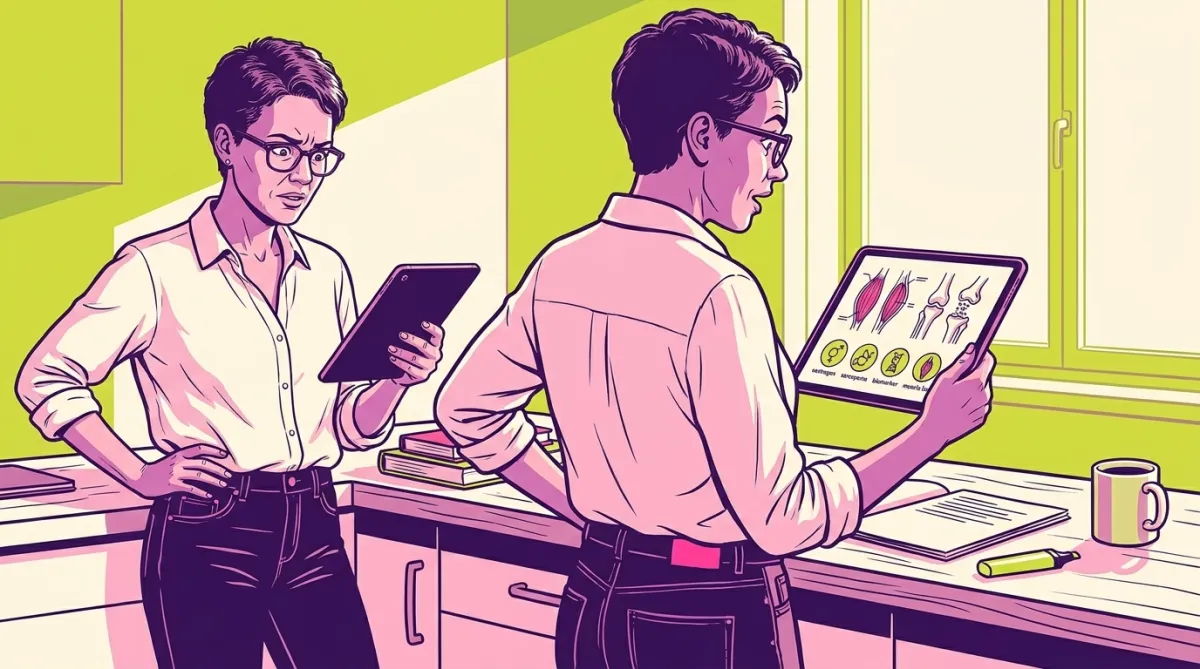
Most women come to me after years of trying to fix something that nobody named correctly. They have cut calories. Done more cardio. Nothing shifts. Or worse: more body fat around the midsection, more fatigue, less recovery. Oestrogen plays a direct role in maintaining muscle protein synthesis. When oestrogen falls, that process slows. A 2024 paper in Climacteric named this the musculoskeletal syndrome of menopause: joint pain, muscle aches, reduced strength, declining bone density, affecting more than 70% of women during the transition.
The Research Your Doctor Probably Hasn't Read
A July 2025 study in Frontiers in Endocrinology followed 407 peri- and postmenopausal women aged 40 to 60 and found that reduced muscle mass index was directly linked to elevated menopausal symptom scores. Less muscle, more symptoms. In March 2025, the Menopause Society reported that a creatinine to cystatin C ratio may predict early sarcopenia in midlife women. Most women are not assessed for sarcopenia until their 70s. According to World Metrics 2026, 50% of women have experienced medical gaslighting. Women are 1.5 times more likely to have symptoms dismissed than men. I am 55. I know this personally.
Why Everything You Have Been Doing Has Been Making It Worse
Chronic cardio without adequate resistance training signals to your body that muscle is unnecessary. Combined with a calorie deficit, your body reduces muscle tissue. It is not making a mistake. The plan that worked at 35 is actively working against you at 48.
What Actually Works (And What to Do First)
Resistance training is the single most effective intervention for preserving and rebuilding muscle mass during and after the menopausal transition. A 2023 systematic review confirmed this. The second piece is protein: around 1.6 to 2.0 grams per kilogram of body weight per day, distributed across meals. Women in Body Reclaim see measurable changes in body composition, energy, and sleep across 8 to 12 weeks of consistent work. Because it was never just menopause. It was a fixable problem that nobody had named correctly.
Questions I Get Asked Every Week
Is it too late if I am already postmenopausal? No. Studies show meaningful muscle gains in women in their 60s and 70s with consistent resistance training.
Can I just do yoga or Pilates? Keep them. But add 2 resistance sessions per week if muscle health is your goal.
Do I need supplements? Food first. Creatine monohydrate has growing evidence for women in menopause. Vitamin D is worth testing. Speak to your GP.
My doctor said it is just menopause. What do I do? Document symptoms. Ask for vitamin D, iron, and thyroid blood tests and a DEXA scan. You are entitled to a second opinion.
How does Body Reclaim address this? Body Reclaim is a 12-week programme built around the Compound Method. Founding member rate: £97. Comment RECLAIM below and I will send you everything you need to know.
Your body is not broken. It is responding to a hormonal shift that affects over 70% of women and is rarely explained properly. You do not need to age the way you watched your mother age. I am Jane Cox. I am 55. This is the work I do.
Jane Cox is a fitness professional and founder of Body Reclaim and Everbodi Ltd. She works with women in their 40s and 50s navigating perimenopause and early menopause through the Compound Method. Jane is 55, based in the UK.