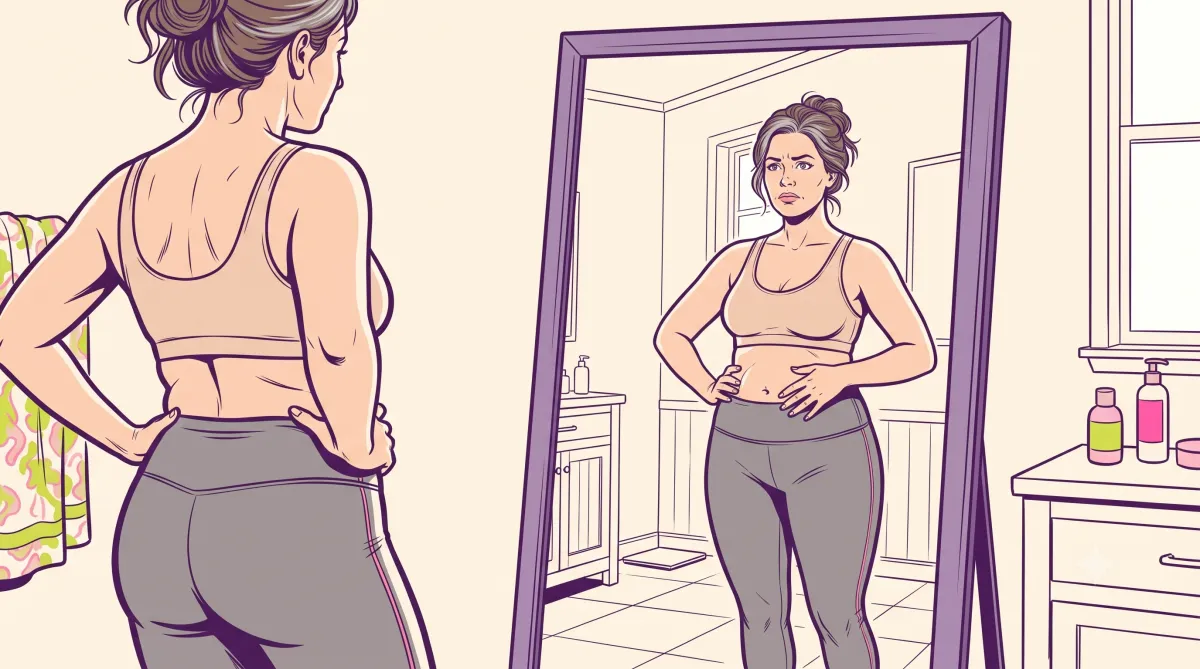
Losing Muscle in Perimenopause? What the Research Actually Shows
Yes, you are losing muscle. And no, it is not because you are not trying hard enough.
If you are in your 40s or early 50s and you have noticed that your arms look different, your legs feel weaker, or the physical effort it used to take to feel strong now seems to produce nothing, that is not in your head. The drop in oestrogen that happens during perimenopause directly accelerates muscle loss in ways the medical world has only recently started taking seriously. Research published in 2024 gave this process its own clinical name.
Women can lose 10 to 20% of their lean muscle mass during perimenopause. After menopause, muscle continues to disappear at around 0.6% per year unless something specific is done to stop it.
Key Takeaways
Women can lose 10 to 20% of lean muscle mass during perimenopause.
In 2024, researchers named this the musculoskeletal syndrome of menopause, affecting 71% of women in perimenopause.
Oestrogen protects your muscles, joints, tendons, and bones.
Resistance training showed measurable improvements in just 4 weeks in a 2025 study.
Your body is responding to a hormonal shift. It is not a permanent state.
What Nobody Told You Was Happening to Your Body
In 2024, a landmark clinical review published in the journal Climacteric officially coined the term musculoskeletal syndrome of menopause. The research found that 71% of women in perimenopause will experience symptoms, and 25% will be severely affected. After menopause, that figure rises to 80%.
And yet the overwhelming majority of women I speak to, including myself at 55 having been through it, were never told any of this. They were told it was stress. They were told it was just getting older.
It is not just getting older. It is oestrogen. And oestrogen does far more than regulate your period.
What the Evidence Actually Says About Oestrogen and Muscle
Oestrogen receptors are not only in your ovaries. They are in your muscles, your joints, your tendons, your ligaments, and your bones. When oestrogen begins its gradual decline in perimenopause, every single one of those tissues is affected.
A study tracking lean mass found a 2.5% reduction in perimenopausal women compared to premenopausal women, rising to 5.7% in postmenopausal women. The rate of change was steepest during perimenopause.
The Climacteric 2024 review explains the mechanism: without oestrogen, inflammation increases, muscles break down faster, and protein synthesis slows.
A meta-analysis in the Journal of Bone and Joint Surgery covering 93,021 women confirmed that musculoskeletal symptoms are among the most common and most under-recognised features of perimenopause.
In 2025, The Menopause Society published findings on a biomarker predicting sarcopenia risk in midlife women.
What You Can Actually Do About It
1. Resistance training is non-negotiable.
A 2025 study found measurable improvements in lean muscle in just 4 weeks from a low-impact resistance exercise programme, across pre-, peri-, and post-menopausal women.
At 55, resistance training is the single most important thing I do. Muscle is not cosmetic. Muscle is functional. Muscle is longevity.
2. Protein needs to go up, not down.
Aim for 25 to 35 grams of protein at each main meal. A practical target is 1.2 to 1.6 grams per kilogram of bodyweight per day. That is higher than most women currently eat, and it makes a real difference when combined with resistance training.
3. Consistent, small action compounds over time.
12 weeks of 3 consistent sessions per week, combined with adequate protein, produces results backed by multiple studies and seen in hundreds of women through Body Reclaim. Small daily decisions that align with the direction you want to move.
4. Sleep and stress are not soft issues.
Cortisol directly competes with muscle protein synthesis. Poor sleep raises cortisol and undermines every other positive action you take during the day. This is physiology. And it is fixable.
FAQ
Why am I losing muscle even though I am still exercising?
If you are doing the same exercise you have always done, it may not be providing enough stimulus to override the hormonal changes of perimenopause. Adding or increasing resistance training is likely to make a measurable difference.
Is it too late to build muscle after 50?
No. The 2025 research found improvements across pre-, peri-, and post-menopausal women from the same programme. Muscle can be built at any age.
How much protein do I actually need in perimenopause?
A practical target is 1.2 to 1.6 grams per kilogram of bodyweight per day. If you weigh 70kg, that is 84 to 112 grams daily, spread across meals.
Can HRT help with muscle loss?
HRT addresses the underlying oestrogen decline and may reduce the rate of muscle and bone loss. Check guidance from the British Menopause Society. HRT and resistance training together appear to produce better outcomes than either alone.
What is Body Reclaim and is it right for me?
Body Reclaim is a 12-week programme for women in perimenopause and beyond. It is not a diet. It is a method. Join the waitlist to be notified when the next intake opens.
Your Body Is Responding. It Is Not Giving Up.
The research is no longer ambiguous. Perimenopause causes measurable muscle loss. It happens to most women. It responds to specific, consistent action.
You are not broken. You are not behind. You are not too old. At 55, I am stronger than I was at 40.
That is what Body Reclaim is built around. Small, consistent, correct action. Over time.
Join the waitlist to be notified when the next Body Reclaim enrolment opens.
About the Author: Jane Cox is a fitness professional and founder of Body Reclaim, a 12-week body composition programme for women in perimenopause and beyond. At 55, Jane combines decades of coaching experience with a deep understanding of the hormonal changes midlife women face.